
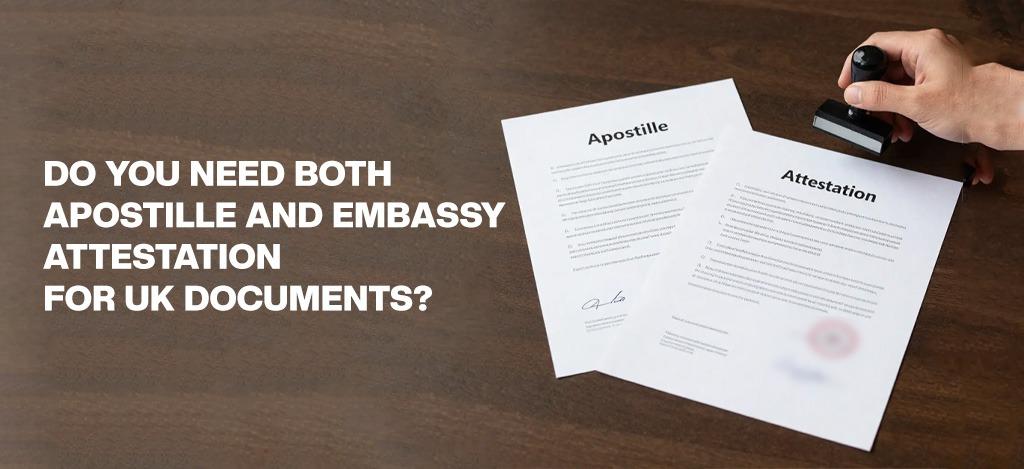
For many UK founders and business owners, international expansion begins with opportunity — entering a new market, opening an overseas branch, securing foreign investment, or building partnerships abroad. But somewhere between planning and execution, one important detail often gets underestimated.
Documentation.
Today, global business expansion is no longer just about market demand or investment potential. Increasingly, it is about compliance, verification, and preparation. As governments strengthen regulations and institutions become more cautious about international transactions, document legalisation is becoming a critical part of doing business across borders.
For many companies, delays no longer happen because the business idea is weak. They happen because documents were not properly prepared, verified, or legally recognised overseas.
UK Businesses Are Expanding Internationally Faster Than Before
In recent years, UK entrepreneurs, startups, consultants, and SMEs have become increasingly global in their outlook. Many businesses are exploring opportunities in regions such as the Middle East, Europe, Asia, and North America much earlier in their growth journey.
Founders are:
-
opening overseas entities,
-
forming international partnerships,
-
hiring remote teams,
-
applying for foreign licenses,
-
and expanding operations into new markets.
However, as international business activity grows, so do compliance requirements.
A document issued in the UK may be perfectly valid domestically, but that does not automatically make it legally acceptable abroad.
For example:
-
company incorporation certificates,
-
shareholder resolutions,
-
power of attorney documents,
-
commercial agreements,
-
board resolutions,
-
and tax-related documents
may still require legalisation before they can be officially recognised in another country.
This is particularly important for businesses entering regulated sectors or jurisdictions with stricter verification procedures.
Why Document Legalisation Is Becoming More Important
Governments and regulatory authorities worldwide are becoming more structured about verifying foreign business documents. This is partly due to increasing international business activity, but also because authorities are strengthening fraud prevention and compliance systems.
For UK businesses, this means documentation is no longer treated as simple paperwork. It has become part of the international business process itself.
Without proper authentication, companies may experience delays while:
-
opening overseas bank accounts,
-
applying for investment approvals,
-
registering foreign branches,
-
onboarding international staff,
-
or securing operational licenses.
In some cases, even legitimate documents can face rejection simply because the required legalisation process was incomplete.
What Apostille Means for UK Founders
One of the most common forms of document legalisation is apostille.
An apostille is an official certification issued for documents that need to be recognised in countries that are part of the Hague Apostille Convention. In the UK, apostilles are commonly issued through the Foreign, Commonwealth & Development Office (FCDO).
In simple terms, an apostille confirms:
“This document is genuine and officially recognised.”
For founders expanding internationally, apostille helps foreign authorities verify that UK-issued documents are authentic.
This becomes especially important when businesses are:
-
setting up overseas operations,
-
entering international partnerships,
-
participating in foreign tenders,
-
opening subsidiaries,
-
or conducting cross-border transactions.
Without proper document authentication, even well-planned expansion strategies can face unexpected administrative delays.
It’s Not Just About Getting a Stamp
One of the biggest misconceptions among business owners is that document legalisation is a quick one-step process.
In reality, it often involves several stages, depending on the destination country and document type.
The process may include:
-
notarisation,
-
apostille,
-
embassy attestation,
-
certified translations,
-
or additional local verification requirements.
And importantly, the sequence matters.
Some countries require notarisation before apostille, while others may request additional embassy attestation or translations depending on local requirements.
For founders managing expansion across multiple countries, this can quickly become confusing.
Small Documentation Errors Can Cause Bigger Delays
Many international business delays happen not because of complicated regulations, but because of small documentation mistakes.
Common issues include:
-
submitting outdated document versions,
-
missing notarisation requirements,
-
incorrect sequencing,
-
failing to check country-specific procedures,
-
or assuming one legalisation process works globally.
For businesses operating under tight timelines, these oversights can create operational delays.
A delayed document can postpone:
-
company registration,
-
investment approvals,
-
banking procedures,
-
contract execution,
-
or licensing processes.
In competitive markets, timing matters. Even short administrative delays can affect launch schedules and business momentum.
Why UK Founders Are Paying More Attention to Compliance
Another reason document legalisation is gaining importance is the growing global focus on compliance and verification.
Governments worldwide are investing more heavily in systems that reduce fraud, improve transparency, and strengthen compliance standards for international business operations.
As businesses become more globally connected, authorities are placing greater importance on properly verified corporate documentation.
For UK founders, this means international expansion increasingly requires not only strong business strategy, but also strong documentation preparation.
Apostille Isn’t Always the Final Step
Another common misunderstanding is that once a document receives an apostille, the process is fully complete.
But requirements differ depending on the destination country.
Some countries accept apostille directly. Others may still require additional embassy legalisation, commercial verification, or local authentication after arrival.
This becomes particularly important for UK businesses expanding into regions with different legal frameworks and documentation systems.
Because of this, many founders are beginning to treat document preparation as part of their overall expansion planning instead of leaving it until the final stages.
Why Preparation Matters More Than Ever
International expansion already comes with uncertainty — market conditions, regulations, hiring challenges, operational setup, and competition.
Documentation should not become an avoidable obstacle on top of that.
Businesses that prepare early, understand international legalisation requirements, and organise documentation properly often move through expansion processes with fewer delays and less stress.
On the other hand, businesses that leave documentation until the last minute may encounter avoidable complications during important growth stages.
Final Thought
The global business environment is becoming more connected, but also more structured.
For UK founders and growing businesses, opportunities abroad continue to increase across sectors and regions. But accessing those opportunities increasingly depends on preparation, compliance, and proper documentation.
Apostille and document legalisation may not be the most visible part of international business expansion, but they are becoming one of the most important.
Because global expansion depends not only on opportunity, but also on preparation.

 English
 Arabic
 French
 Spanish
 Portuguese
 Deutsch
 Turkish
 Dutch
Dutch
 Italiano
 Russian
 Romaian
 Greek
Greek