
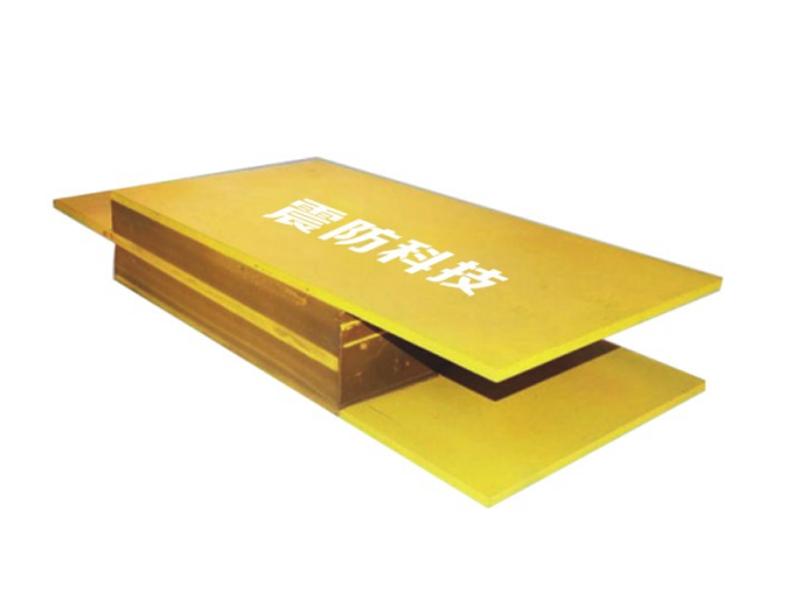
The application of viscous friction dampers spans civil, mechanical, and aerospace engineering, offering solutions where control of dynamic response is critical. In civil engineering, their most prominent use is in tall buildings and long-span bridges. For skyscrapers, viscous friction dampers are installed within structural bracing systems or at outrigger levels to counter wind-induced vibrations. By absorbing the energy from wind gusts, these dampers significantly reduce occupant discomfort and perceived sway, improving the habitability of the building without adding substantial weight or stiffness. The performance of a viscous friction damper in such applications is tailored to the specific wind climate and dynamic properties of the structure.
In seismic regions, viscous friction dampers play a vital role in enhancing earthquake resilience. They are installed in buildings and bridges to absorb a substantial portion of the seismic energy input. During an earthquake, the rapid back-and-forth ground motion is transferred to the structure. The integrated viscous friction damper activates immediately, generating damping forces that reduce the amplitude of structural vibrations, lower floor accelerations, and minimize inter-story drift. This protection helps prevent both structural damage and the failure of non-structural components like cladding and partitions. For bridges, viscous friction dampers are often placed between the deck and the piers or abutments to manage relative displacements caused by seismic activity, thermal expansion, or traffic loads, thereby protecting critical bearings and expansion joints.
Beyond large structures, viscous friction damper technology is applied in other demanding fields. In aerospace, they are used in aircraft landing gear to absorb impact energy and control oscillations. In the power generation sector, viscous friction dampers stabilize piping systems subjected to fluid-induced vibrations. The benefits of using a viscous friction damper are significant. As a passive device, it requires no external power source or active control system, ensuring reliability and reducing maintenance needs. Its velocity-dependent force output provides high damping exactly when it is most needed—during rapid motion—while allowing for unrestricted slow movements due to temperature changes. Furthermore, because it adds damping without adding significant stiffness, a viscous friction damper can be retrofitted into existing structures to upgrade their performance without necessitating major redesign of the primary structural system. This adaptability and effectiveness solidify its position as a preferred energy dissipation strategy in modern engineering design.

 Arabic
 French
 Spanish
 Portuguese
 Deutsch
 Turkish
 Dutch
Dutch
 Italiano
 Russian
 Romaian
 Portuguese (Brazil)
 Greek
Greek