

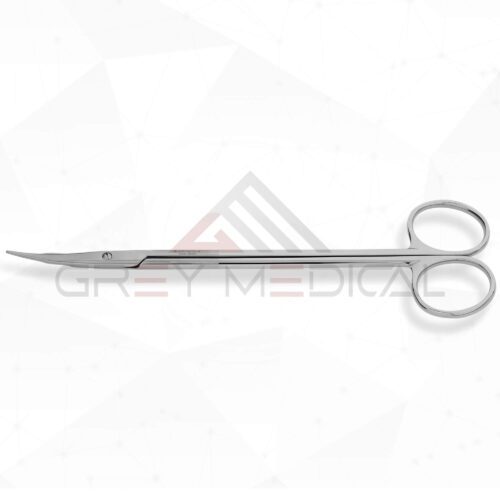
Precision remains the defining element of success in every surgical room, and select tools demonstrate this standard as clearly as metzenbaum dissecting scissors. Engineered specifically for delicate tissue handling, these scissors feature long shanks paired with comparatively short blades to maximize control. The metzenbaum dissecting scissors delicate curvature and blunt tips allow surgeons to navigate intricate anatomical structures safely, minimizing accidental punctures or trauma to surrounding delicate tissues.
Core Features and Ergonomic Excellence in Surgical Applications
When performing intricate procedures, medical practitioners depend heavily on the distinct tactile feedback provided by metzenbaum dissecting scissors. Constructed from high-grade stainless steel or specialized tungsten carbide, these instruments feature smooth ring handles that reduce hand fatigue during lengthy operations. Their balanced weight distribution ensures smooth cutting action along the entire length of the blade, enabling fluid dissecting motions without snagging or dragging.
Key Distinctions Between Metzenbaum and Mayo Scissors
In operating theaters, choosing the appropriate cutting instrument is vital for patient safety and procedural success. Surgeons frequently distinguish metzenbaum dissecting scissors from heavier alternatives like Mayo scissors based on tissue density. While Mayo scissors handle tough, fibrous structures such as fascia or sutures, Metzenbaum variants excel strictly at soft, delicate tissue separation and fine dissection, preserving tissue integrity during sensitive surgical maneuvers.
Specialized Variations for Diverse Surgical Disciplines
Modern operating suites require versatile instrumentation tailored to specific surgical specialties. Manufacturers offer metzenbaum dissecting scissors in various configurations, including straight and curved tendon passer options, as well as super-cut edges and tungsten carbide inserts. From cardiovascular operations to plastic and reconstructive surgery, these specialized variations empower surgical teams to adapt seamlessly to differing anatomical depth and anatomical constraints.
Sterilization Practices and Instrument Maintenance
To maintain exceptional performance over years of clinical use, surgical facilities enforce strict cleaning protocols for metzenbaum dissecting scissors. Proper decontamination involves immediate post-operative rinsing, ultrasonic cleaning, and sterilization in steam autoclaves. Consistent inspection of the pivot screw and blade sharpness ensures that each pair continues to deliver clean, effortless cuts without dulling or tearing sensitive tissues.
Conclusion
Quality surgical outcomes rely fundamentally on the reliability and precision of specialized operating room tools. Superior manufacturing, ergonomic design, and careful maintenance make these scissors an irreplaceable staple across modern medical disciplines. By investing in premium instruments engineered to rigorous quality standards, healthcare institutions ensure optimal surgeon performance and consistent patient care in every procedure.

 English
 Arabic
 Spanish
 Portuguese
 Deutsch
 Turkish
 Dutch
 Italiano
 Russian
 Romaian
 Portuguese (Brazil)
 Greek