
Why Amla Seed Oil Is Gaining Attention in Modern Hair Care
The cosmetics industry is constantly searching for botanical ingredients that combine traditional appeal with modern formulation potential. One ingredient receiving increasing attention is Amla Seed Oil, derived from the seeds of Phyllanthus emblica, commonly known as Indian gooseberry.
For centuries, amla has been associated with Ayurvedic hair care, traditional scalp treatments, and botanical beauty routines. Today, formulators are exploring different amla-derived ingredients for natural hair care products, including hair oils, scalp serums, conditioners, masks, and other personal care formulations.
For cosmetic manufacturers, the attraction goes beyond tradition. Amla Seed Oil can offer a plant-derived lipid ingredient that fits the growing demand for botanical hair care, plant-based cosmetics, and cleaner-looking ingredient profiles.
With expertise in botanical ingredients and cosmetic raw materials, Aroma Monk helps businesses explore quality-focused ingredients for modern personal care formulations.
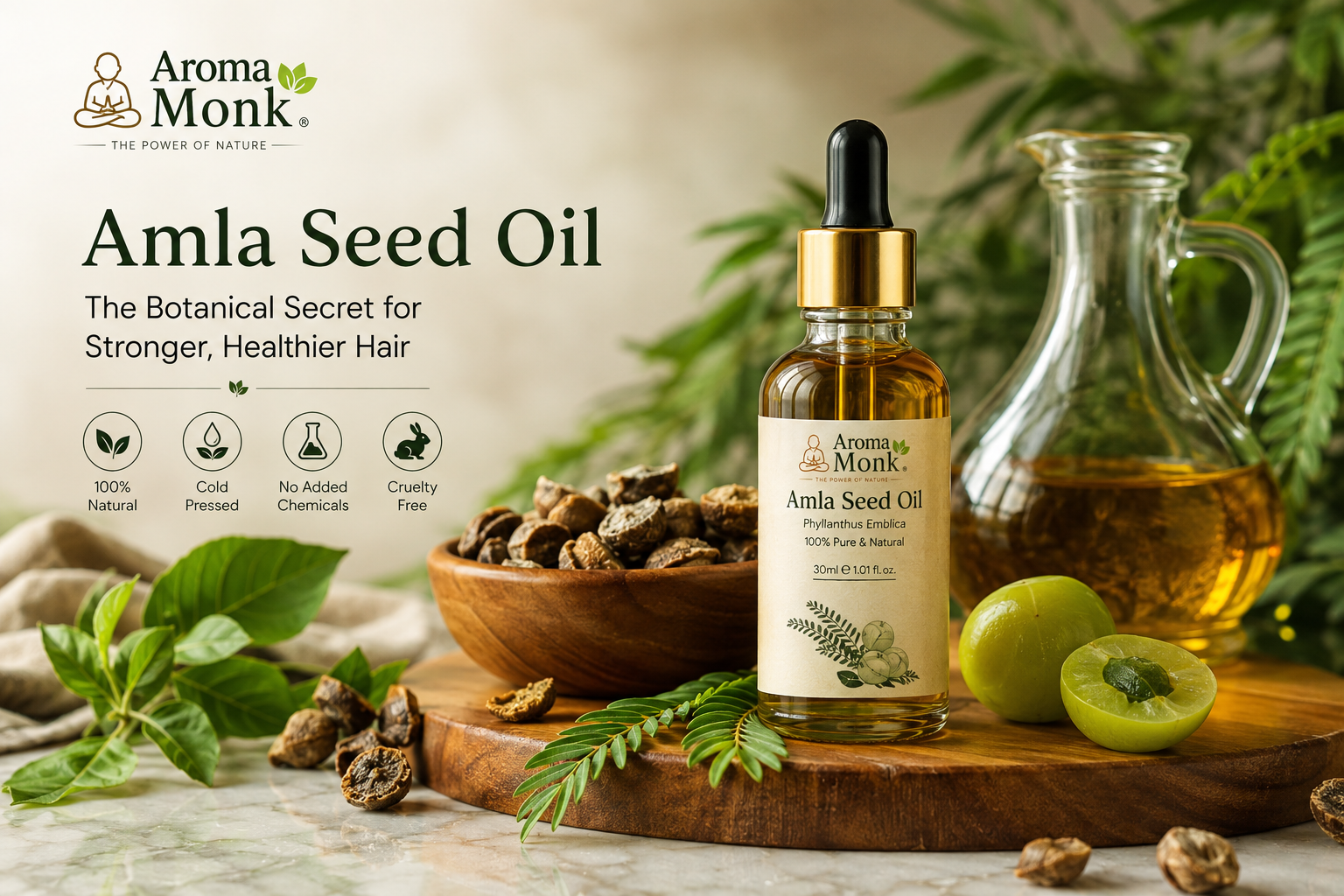
What Is Amla Seed Oil?
Amla Seed Oil is an oil obtained from the seeds of the amla fruit. This is important because it should not automatically be considered identical to traditional amla hair oil.
Commercial amla hair oil may be produced by infusing amla fruit or amla powder into a carrier oil such as coconut, sesame, or another vegetable oil. Amla seed oil, in contrast, specifically refers to oil associated with the seed portion of the plant.
This distinction matters to cosmetic manufacturers because the source, extraction method, processing conditions, and final formulation can influence an ingredient's characteristics.
For brands developing professional hair care formulations, understanding the difference between an infused botanical oil and a seed-derived oil helps create more transparent ingredient strategies.
Why Use Amla Seed Oil in Commercial Cosmetics?
The modern beauty consumer is increasingly interested in recognizable botanical ingredients. This has encouraged manufacturers to investigate traditional ingredients that can be incorporated into contemporary formulations.
Here are several reasons Amla Seed Oil for hair can be interesting to commercial formulators:
1. Botanical Positioning
Amla has strong recognition within Indian herbal hair care and Ayurvedic beauty products. Including an amla-derived ingredient can therefore support product positioning around botanical and traditional-inspired beauty.
This can be particularly valuable for brands developing herbal hair oils, scalp treatments, and naturally positioned cosmetic products.
2. Suitable for Oil-Based Formulations
Because it is an oil-based botanical ingredient, Amla Seed Oil can be considered for formulations where an emollient or botanical oil component is required.
Potential product formats may include:
-
Hair oils
-
Scalp oils
-
Hair serums
-
Pre-shampoo treatments
-
Hair masks
-
Conditioning treatments
-
Botanical hair blends
The exact use level should always be determined through formulation testing, ingredient specifications, stability assessment, and applicable cosmetic regulations.
3. Consumer Interest in Botanical Ingredients
Terms such as natural hair care ingredients, plant-based hair products, and clean beauty formulations continue to influence purchasing decisions.
Amla provides a familiar botanical story while allowing brands to create modern products around traditional Indian beauty concepts.
Amla Seed Oil vs. Traditional Amla Hair Oil
One of the biggest sources of confusion in the market is the assumption that every product called amla oil contains the same type of ingredient.
They are not necessarily the same.
For commercial cosmetic buyers, this difference is critical. A formulation should clearly identify the ingredient being purchased and specify its botanical source and processing method.
Brands should also review the appropriate INCI name, technical documentation, specifications, and regulatory requirements before incorporating an ingredient into a finished product.
Benefits of Amla Seed Oil for Hair Care Formulations
Amla has long been associated with scalp care, hair conditioning, and traditional herbal beauty routines. From a commercial formulation perspective, its strongest advantage may be its versatility as part of a broader botanical concept.
Supports Botanical Hair Care Concepts
Consumers searching for amla oil for hair, Indian gooseberry hair oil, and Ayurvedic hair oil are often interested in products inspired by traditional plant-based routines.
Using an amla-derived ingredient allows brands to build products around this established botanical identity while adapting the formulation to contemporary preferences.
Works Well With Other Cosmetic Oils
Amla-derived oils can potentially be combined with other carrier oils for hair, depending on formulation objectives.
Common complementary ingredients in botanical hair care may include coconut oil, sesame oil, jojoba oil, argan oil, castor oil, and other vegetable oils.
A formulator can create different textures and sensory profiles by adjusting the oil phase and combining ingredients with complementary characteristics.
Supports Premium Product Storytelling
Ingredient storytelling is increasingly important in commercial cosmetics. A product containing a recognizable botanical ingredient can provide opportunities for education-focused packaging and marketing.
For example, a brand can communicate the heritage of Indian gooseberry, botanical sourcing, and the role of plant-derived oils in a modern scalp care formulation.
However, cosmetic marketing should remain responsible. Claims about treating hair loss, curing scalp conditions, or producing medical effects require appropriate evidence and regulatory consideration.
How Cosmetic Manufacturers Can Formulate With Amla Seed Oil
Before introducing Amla Seed Oil into cosmetics, manufacturers should evaluate several technical factors.
1. Ingredient Quality
Choose a supplier that can provide relevant documentation and consistent raw material quality. Important considerations can include:
-
Botanical identity
-
Extraction or processing method
-
Appearance
-
Odor
-
Physicochemical specifications
-
Batch consistency
-
Storage recommendations
-
Relevant testing documentation
Reliable cosmetic raw material suppliers can help manufacturers reduce uncertainty during product development.
2. Oxidative Stability
Like many botanical oils, an oil ingredient should be evaluated for oxidation and storage stability.
Formulators may assess compatibility with antioxidants, packaging materials, air exposure, light exposure, and temperature conditions.
Appropriate cosmetic formulation testing can help determine the expected shelf life of a finished product.
3. Sensory Performance
A commercial hair oil needs to perform well beyond its ingredient story.
Consumers evaluate products based on spreadability, absorption, greasiness, fragrance, after-feel, shine, and ease of washing.
Therefore, formulators should evaluate how Amla Seed Oil performs within the complete formula rather than judging the ingredient in isolation.
Amla Seed Oil in Different Commercial Hair Products
The versatility of amla-derived ingredients makes them suitable for exploring multiple cosmetic categories.
Hair Oils
Hair oils are perhaps the most obvious application. Amla can be positioned alongside other botanical oils to create herbal hair oil formulations designed for scalp and hair conditioning.
Scalp Serums
Lightweight oil-based or anhydrous scalp products can incorporate botanical oils as part of a premium scalp care product concept.
Hair Masks
Amla-derived ingredients can also become part of intensive conditioning concepts containing botanical oils, butters, extracts, and other hair-conditioning ingredients.
Conditioners and Treatments
Depending on the ingredient's specifications and formulation compatibility, amla-derived materials can contribute to broader botanical hair treatment concepts.
Choosing a Reliable Amla Seed Oil Supplier
For commercial production, choosing an ingredient supplier is just as important as selecting the ingredient itself.
Manufacturers should look for suppliers that prioritize:
-
Consistent raw material quality
-
Clear botanical identification
-
Technical documentation
-
Batch-to-batch consistency
-
Proper packaging
-
Storage guidance
-
Reliable supply capabilities
-
Transparent communication
Aroma Monk is positioned around supplying botanical and cosmetic raw materials for businesses looking to develop plant-focused personal care products. For manufacturers interested in exploring Amla Seed Oil, working with a knowledgeable supplier can make ingredient sourcing and product development more efficient.
Why Aroma Monk for Botanical Cosmetic Ingredients?
A successful cosmetic product begins with dependable raw materials. Aroma Monk focuses on botanical ingredients and oils for businesses developing products across beauty, wellness, and personal care categories.
For brands creating natural hair care products, herbal hair oils, scalp treatments, and botanical cosmetic formulations, sourcing should be approached with the same attention given to formulation, packaging, and finished-product testing.
The right ingredient partner can help manufacturers move from an interesting botanical concept to a commercially viable formulation.
Final Thoughts
Amla Seed Oil represents an interesting opportunity for modern cosmetic manufacturers seeking botanical ingredients with a strong connection to traditional Indian hair care.
Its potential applications extend across hair oils, scalp products, hair masks, serums, and other botanical formulations. However, commercial success depends on more than simply adding amla to a product label.
Ingredient identity, quality, extraction method, formulation compatibility, stability, sensory performance, documentation, and responsible marketing all matter.
For brands exploring the next generation of Ayurvedic-inspired hair care, Amla Seed Oil can provide a compelling botanical ingredient around which innovative products can be developed.
With a focus on botanical raw materials and commercial ingredient sourcing, Aroma Monk can be a valuable partner for businesses looking to turn traditional plant ingredients into modern cosmetic formulations.

 English
 Arabic
 French
 Spanish
 Deutsch
 Turkish
 Dutch
Dutch
 Italiano
 Russian
 Romaian
 Portuguese (Brazil)
 Greek
Greek