
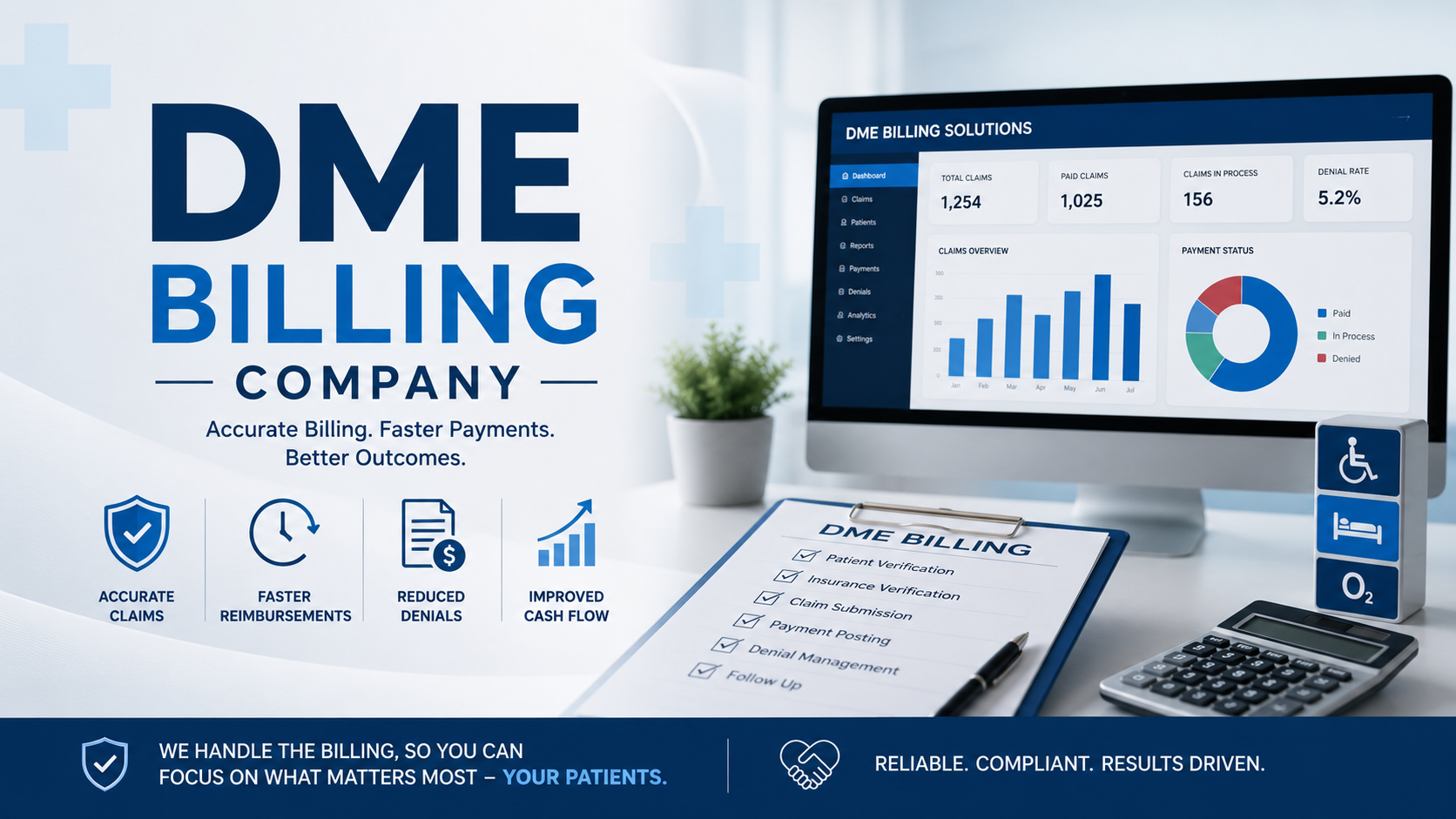
Durable Medical Equipment (DME) providers play a critical role in patient care by supplying equipment such as wheelchairs, oxygen concentrators, CPAP machines, walkers, hospital beds, and other medically necessary products. While delivering quality equipment is essential, managing the billing process can be equally challenging.
DME billing involves complex regulations, strict documentation requirements, frequent payer policy changes, and extensive claim follow-ups. Even a small mistake can result in denied claims, delayed reimbursements, or compliance risks. Because of these challenges, many providers are turning to outsourcing DME billing as a practical solution to improve operational efficiency and financial performance.
This article explores why outsourcing DME billing is becoming increasingly popular, its benefits, and how providers can choose the right billing partner.
Why DME Billing Is More Complex Than Traditional Medical Billing
Unlike many healthcare specialties, DME billing requires providers to manage multiple layers of documentation and compliance requirements. Insurance companies often demand detailed medical necessity records, physician orders, delivery confirmations, and prior authorizations before approving claims.
Additionally, DME providers frequently work with government programs, commercial insurers, and managed care organizations, each with unique billing guidelines. Keeping up with these requirements requires dedicated expertise and constant monitoring.
Common DME billing challenges include:
- Frequent claim denials due to incomplete documentation
- Prior authorization requirements
- Complex HCPCS coding regulations
- Rental versus purchase billing rules
- Medicare compliance requirements
- Delayed reimbursements
- Managing payer-specific policies
For many organizations, maintaining an in-house billing team capable of handling these complexities can be expensive and time-consuming.
Key Benefits of Outsourcing DME Billing
Improved Claim Accuracy
One of the primary advantages of outsourcing DME billing is access to experienced billing professionals who specialize in DME claims processing. These experts understand payer requirements, coding updates, and documentation standards.
As a result, claims are submitted accurately the first time, reducing the likelihood of rejections and denials.
Accurate billing helps providers:
- Receive faster reimbursements
- Minimize administrative rework
- Improve cash flow
- Reduce claim correction costs
When claims are processed correctly from the beginning, providers spend less time addressing avoidable billing errors.
Reduced Administrative Burden
Managing billing internally requires significant resources. Staff members must handle claim submission, payment posting, denial management, insurance verification, prior authorizations, and patient billing.
By outsourcing DME billing, providers can transfer these responsibilities to a dedicated team while allowing internal staff to focus on patient service and business growth.
Benefits include:
- Less administrative workload
- Reduced staffing challenges
- Lower training expenses
- Greater operational efficiency
- Improved employee productivity
This streamlined approach often helps organizations operate more effectively without increasing overhead costs.
Faster Revenue Cycle Management
Cash flow is critical for every DME provider. Delayed payments can affect inventory management, equipment purchases, and overall business stability.
Professional billing companies typically use advanced revenue cycle management processes to accelerate reimbursements. They monitor claims from submission through payment and quickly address issues that could delay collections.
Effective revenue cycle management includes:
- Insurance eligibility verification
- Timely claim submission
- Payment tracking
- Denial management
- Appeals processing
- Accounts receivable follow-up
These processes help providers maintain a healthier financial position while reducing outstanding balances.
How Outsourcing DME Billing Helps Reduce Claim Denials
Claim denials are among the most costly challenges facing DME providers. Every denied claim requires additional staff time and resources to investigate, correct, and resubmit.
Experienced billing specialists implement proactive strategies to reduce denial rates.
Thorough Documentation Review
Before claims are submitted, billing teams verify that all required documents are complete and compliant. This includes:
- Physician orders
- Medical necessity documentation
- Delivery confirmations
- Prior authorization approvals
- Supporting clinical records
Comprehensive documentation review significantly reduces denial risks.
Accurate Coding Practices
Incorrect coding remains one of the leading causes of claim denials. Outsourced billing professionals stay current with coding updates and payer-specific requirements.
They ensure proper:
- HCPCS coding
- Modifier usage
- Diagnosis code selection
- Claim formatting
Accurate coding improves claim acceptance rates and reimbursement accuracy.
Active Denial Management
Even well-prepared claims can occasionally face denials. Professional billing teams continuously monitor denied claims and initiate prompt corrective actions.
This process includes:
- Identifying denial reasons
- Correcting claim errors
- Preparing appeals
- Tracking resubmissions
- Following up with payers
A structured denial management process helps recover revenue that might otherwise be lost.
Choosing the Right DME Billing Partner
Not all billing companies offer the same level of expertise. Selecting the right partner is essential for achieving positive results from outsourcing DME billing.
Look for DME-Specific Experience
DME billing differs significantly from physician practice billing. Providers should seek companies with proven experience handling DME claims and payer requirements.
Ask potential partners about:
- Years of DME billing experience
- Types of equipment billed
- Medicare expertise
- Denial reduction strategies
- Compliance procedures
Industry-specific knowledge can make a substantial difference in billing performance.
Evaluate Technology and Reporting
Modern billing companies should offer transparent reporting and advanced billing systems that provide visibility into financial performance.
Key reporting features may include:
- Claim status tracking
- Denial reports
- Collection summaries
- Accounts receivable aging reports
- Revenue trend analysis
Access to real-time data helps providers make informed business decisions.
Verify Compliance Standards
Healthcare billing involves strict regulatory requirements. Providers should ensure their billing partner follows industry standards for privacy, security, and compliance.
Important considerations include:
- HIPAA compliance
- Secure data handling
- Regular staff training
- Compliance monitoring
- Audit support
A compliant billing partner helps reduce organizational risk while protecting sensitive patient information.
The Long-Term Financial Impact of Outsourcing DME Billing
While some providers initially hesitate to outsource billing functions, many discover significant long-term financial benefits.
Organizations often experience:
- Higher collection rates
- Reduced claim denials
- Faster reimbursements
- Lower staffing costs
- Improved operational efficiency
- Better financial forecasting
By partnering with specialized billing professionals, DME providers gain access to expertise and resources that may be difficult to maintain internally.
The result is a more predictable revenue cycle and greater focus on delivering quality patient care.
Frequently Asked Questions (FAQs)
What is DME billing?
DME billing refers to the process of submitting insurance claims and obtaining reimbursement for durable medical equipment such as wheelchairs, oxygen equipment, CPAP machines, walkers, and hospital beds.
Why do providers choose outsourcing DME billing?
Providers choose outsourcing DME billing to reduce administrative workload, improve claim accuracy, lower denial rates, and accelerate reimbursements.
Can outsourcing DME billing improve cash flow?
Yes. Professional billing companies help streamline revenue cycle management, submit claims promptly, and follow up on unpaid accounts, resulting in faster payments and improved cash flow.
Is outsourcing DME billing cost-effective?
In many cases, outsourcing is more cost-effective than maintaining a large in-house billing department because it reduces staffing, training, software, and operational expenses.
How do billing companies handle denied claims?
Experienced billing teams investigate denial reasons, correct claim issues, prepare appeals when necessary, and communicate with payers to maximize reimbursement recovery.
Conclusion
As reimbursement requirements become more complex, DME providers face increasing pressure to maintain accurate billing, reduce denials, and improve financial performance. Outsourcing DME billing offers a practical solution by providing specialized expertise, streamlined revenue cycle management, and stronger compliance support.
By partnering with an experienced billing company, providers can focus on patient care while improving collections, accelerating reimbursements, and reducing administrative burdens. Professional Medical Billing Services can help DME organizations strengthen their revenue cycle, maintain compliance, and achieve long-term financial stability in an increasingly competitive healthcare environment.

 English
 Arabic
 French
 Portuguese
 Deutsch
 Turkish
 Dutch
Dutch
 Italiano
 Russian
 Romaian
 Portuguese (Brazil)
 Greek
Greek