
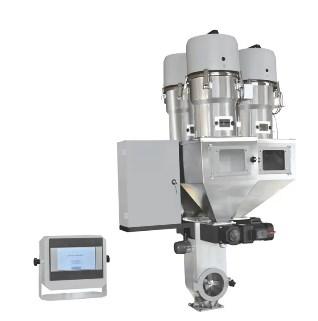
Introduction to Vertical Color Mixers
A Vertical Color Mixer is a specialized mixing machine used in various industries to blend colorants, pigments, or other materials uniformly. These machines are designed with a vertical configuration, which contrasts with traditional horizontal mixers commonly used in the market. Both vertical and horizontal mixers have their unique benefits, but a Vertical Color Mixer offers distinct advantages in terms of efficiency, material handling, and space-saving. This article will explore the benefits of Vertical Color Mixers when compared to their horizontal counterparts.
Space Efficiency
One of the most notable advantages of a Vertical Color Mixer is its compact design, which allows it to save valuable floor space. Unlike horizontal mixers, which require a large amount of horizontal space for operation, vertical mixers have a smaller footprint and can be more easily integrated into production lines where space is limited. This is especially beneficial in facilities with high-density equipment arrangements or smaller workshop areas.
Vertical mixers can be placed in tight spaces without compromising their ability to handle large volumes of materials. This space-saving design helps maximize available workspace, making it ideal for smaller businesses or facilities that aim to optimize floor space.
Enhanced Material Mixing Efficiency
The vertical orientation of the mixer allows for more efficient material flow and better consistency in mixing. The central axis rotation of the Vertical Color Mixer helps ensure a more uniform blending of materials, reducing the risk of unevenly mixed components. As the materials are subjected to centrifugal force, the action promotes quicker and more thorough mixing compared to horizontal mixers, where material flow can sometimes be less efficient due to the layout and design.
Moreover, the vertical configuration enables better contact between materials and the mixing blades, which enhances the overall mixing performance. This is particularly advantageous when dealing with materials that have varying densities or when a high degree of precision is required in the mixing process.
Reduced Mixing Time
In many cases, Vertical Color Mixers are able to achieve the desired level of mixing in a shorter time frame compared to horizontal mixers. The design allows for a faster and more efficient process because materials experience continuous motion along a vertical axis, ensuring that all components are evenly distributed. This is beneficial in industries where speed is critical, such as in plastics, coatings, or colorant production.
Since the vertical configuration can facilitate quicker material movement, businesses can achieve faster production cycles, leading to increased throughput and efficiency. Shorter mixing times not only increase operational speed but also reduce energy consumption, making vertical mixers more cost-effective over time.
Improved Energy Efficiency
Energy efficiency is a key consideration in manufacturing processes, and Vertical Color Mixers offer significant advantages in this area. Thanks to their design and faster mixing capabilities, vertical mixers often require less power to operate compared to horizontal mixers. Their ability to achieve uniform mixing with less effort reduces the need for high-powered motors, making them more energy-efficient.
This reduced energy consumption translates into cost savings for businesses in the long term. Additionally, the smaller size of the vertical mixer may contribute to lower operating and maintenance costs, further improving the overall cost-efficiency of the operation.
Easy Maintenance and Cleaning
Vertical mixers are generally easier to maintain and clean compared to horizontal mixers. Their design often includes simpler components with fewer moving parts, which means less wear and tear and lower maintenance needs. The ability to access key parts of the machine more easily can reduce downtime during maintenance and make repairs quicker and less costly.
The cleaning process in a Vertical Color Mixer is also simplified due to its vertical configuration. Material residue and build-up are less likely to accumulate in hard-to-reach areas, making the cleaning process more efficient and less time-consuming.
A Vertical Color Mixer offers numerous advantages over horizontal mixers, including better space efficiency, faster mixing times, improved energy efficiency, and easier maintenance. Its compact design and enhanced performance make it a valuable choice for businesses looking to optimize their mixing processes while saving on space and operational costs.

 English
 Arabic
 French
 Spanish
 Deutsch
 Turkish
 Dutch
Dutch
 Italiano
 Russian
 Romaian
 Portuguese (Brazil)
 Greek
Greek