

Industrial Recuperator – Efficient Heat Recovery Solutions by Trymax Furnace
In modern industrial heating and furnace systems, energy efficiency and fuel cost optimization are major priorities. An industrial recuperator plays a crucial role in improving combustion efficiency by recovering waste heat and reusing it to preheat combustion air. As one of India's leading industrial furnace manufacturers, Trymax Furnace specializes in advanced recuperators and complete heat recovery solutions designed to enhance furnace performance and reduce operational costs.
What Is an Industrial Recuperator?
An industrial recuperator is a special-purpose counter-flow energy recovery heat exchanger positioned within the exhaust gas stream of a furnace or combustion system. Its main function is to capture heat from hot flue gases that would otherwise be wasted and transfer that heat to fresh air entering the burners. This preheated air improves combustion efficiency, reduces fuel consumption, and enhances overall thermal performance.
In essence, the recuperator harnesses the energy already present in waste gases and reuses it intelligently to make the furnace more efficient and cost-effective — a key advantage in industrial applications where fuel costs and heat losses can significantly impact profitability.
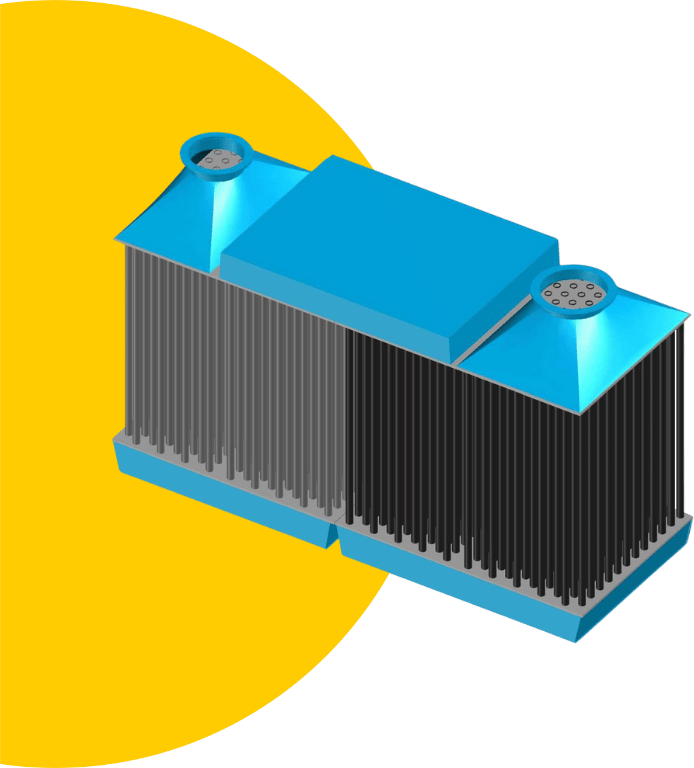
How Industrial Recoverers Work
An industrial recuperator operates on the principle of heat exchange between hot and cold streams without direct mixing. In typical recuperator designs:
-
Flow gases from the furnace (hot stream) pass through one section of the heat exchanger.
-
Fresh air for combustion (cold stream) passes through a separate section in the opposite direction.
-
Heat from the hot exhaust gas transfers through the recuperator walls to the cold incoming air, raising its temperature before it enters the combustion chamber.
This counter-flow arrangement ensures maximum heat transfer efficiency, preheating combustion air up to high temperatures depending on design and material selection.
Key Benefits of Industrial Recuperators
Industrial recuperators offer several advantages that make them vital components in modern furnaces and heating systems:
1. Improved Energy Efficiency
By recovering waste heat and preheating combustion air, recuperators significantly reduce the amount of fuel needed to reach the desired furnace temperatures. This results in lower fuel consumption and reduced operating costs.
2. Reduced Fuel Costs
Since recuperators reduce the fuel required for heating, businesses can see measurable savings on their fuel expenses. In many cases, this can lead to quick payback periods on the recovery investment.
3. Higher Furnace Productivity
Preheating combustion air allows furnaces to reach operating temperatures faster and maintain stable heating cycles, improving furnace productivity and reducing cycle times.
4. Lower Emissions
With better combustion efficiency, recuperators contribute to lower CO₂ emissions , supporting environmental compliance and sustainability goals.
5. Wider Furnace Application
Industrial recuperators can be used in various systems including reheating furnaces , heat treatment furnaces , rolling mill furnaces , melting furnaces , and other high-temperature process systems.
Applications of Industrial Recuperators
Industrial recuperators are widely used wherever high-temperature thermal systems operate, such as:
-
Steel and metals industries for furnace heating and heat treatment applications
-
Reheating furnaces in rolling mills
-
Ceramic and glass processing furnaces
-
Forging and thermal process equipment
-
Gas-fired heaters and industrial boilers
In each of these applications, the recuperator improves combustion efficiency and contributes to better fuel economy and operational sustainability.
Trymax Furnace's Industrial Recovery Solutions
At Trymax Furnace , industrial recuperators are engineered with a focus on performance, durability, and fuel-saving efficiency . These recuperators are suitable for integration with various furnace types used across steel, forging, and industrial heating applications.
Advanced Heat Recovery Design
Trymax recuperators use counter-flow heat exchanger designs that maximize thermal transfer. This allows incoming combustion air to be preheated effectively, improving furnace efficiency and energy utilization.
Wide Temperature Range
Designed to operate in a broad range of temperature environments (typically 100–600 °C), industrial recuperators from Trymax are robust and reliable for diverse industrial furnace demands.
Customizable Solutions
Trymax offers customized recuperator designs tailored to specific equipment, fuel types, and exhaust characteristics, ensuring optimal performance for each application.
Durable Construction
Built with high-quality materials such as mild steel and stainless steel, these recuperators are constructed to withstand severe industrial environments while providing long service life and consistent performance.
Why Industrial Reclaimers Matter in Modern Furnaces
Industrial furnaces are central to many high-temperature manufacturing processes, and recuperators help make them more efficient and economical. When waste heat is captured and reused, furnace systems operate with reduced fuel demand and improved overall performance.
In industries like steel, forging, and heat treatment, improved combustion efficiency translates into lower production costs , higher output quality , and better thermal control . As energy prices and environmental standards continue to pressure industrial operations, recuperators offer a smart solution to enhance furnace performance.
Conclusion
An industrial recuperator is more than just a heat exchanger — it is a smart heat recovery system that enables better furnace efficiency, reduced fuel costs, and enhanced productivity across industrial heating operations. As a trusted industrial furnace manufacturer, Trymax Furnace delivers high-quality recuperators engineered for durability and performance in demanding environments. Whether used in reheating furnaces, heat treatment systems, or other industrial heating equipment, these heat recovery systems play a vital role in achieving energy-efficient and cost-effective operations.

 English
 Arabic
 French
 Portuguese
 Deutsch
 Turkish
 Dutch
Dutch
 Italiano
 Russian
 Romaian
 Portuguese (Brazil)
 Greek
Greek